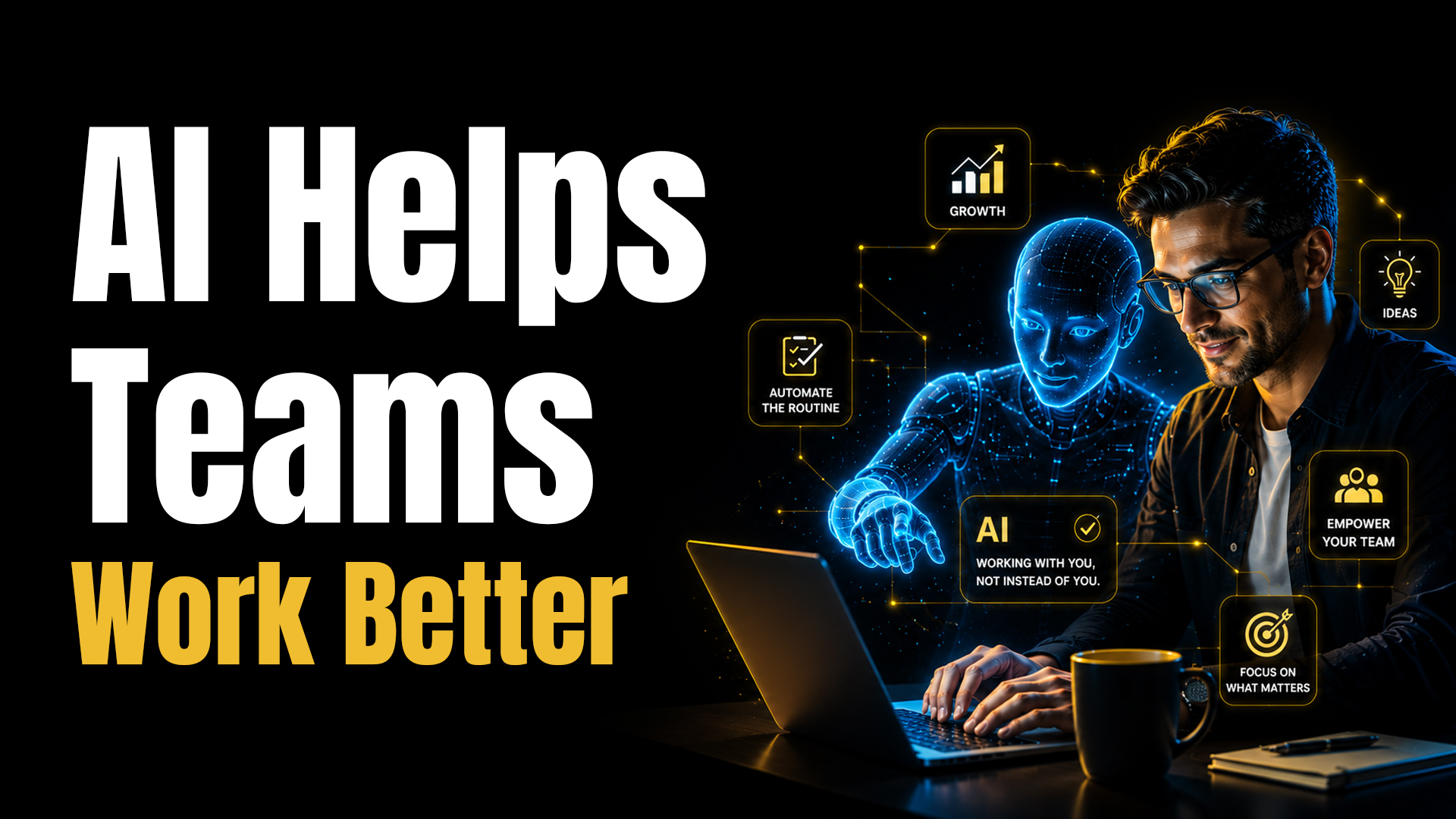
How AI Is Not Here to Take Your Team's Jobs. It's Here to Make Them Better at Theirs
Every week, I talk to business leaders who are either sprinting toward AI or quietly dreading it. The fear usually comes down to one question: "Will this replace my people?" My answer, after years of deploying technology for businesses in Seattle and beyond, is a firm no. But only if you approach it the right way.
Let me be direct with you: I'm not here to sell you on a buzzword. I've spent my career helping businesses get more out of their technology. Not more complexity, not more vendor dependency, not more fear. And right now, AI done right is one of the most powerful tools I've ever seen for making your existing employees more capable, more confident, and frankly, more fulfilled in their work.
But done wrong? It absolutely can disrupt teams, erode trust, and create chaos. So let's talk about what "done right" actually looks like.
The Replacement Narrative Is a Distraction
The headlines love drama. "AI Will Take 40% of Jobs!" is a better click than "AI Helps Accountant Finish Audit 3 Hours Faster." But as a business leader, you need to tune that noise out and ask a more practical question: What are my people spending time on that doesn't actually require their expertise?
Think about your best employees. Your sharpest project manager, your most experienced customer service rep, your most dialed-in salesperson. How much of their day is spent on work that genuinely demands their skill? And how much is admin, data entry, sorting through emails, writing first drafts of documents they'll rewrite anyway?
That's where AI lives. It's not competing with your team's judgment, relationships, or institutional knowledge. It's taking the friction out of their day so they can actually use those things.
"Your people aren't being outpaced by AI. They're being held back by repetitive work that AI was built to handle."
Where AI Actually Shows Up as a Support Tool
I want to get specific, because "AI supports employees" is too vague to be useful. Here's what this looks like in real businesses, businesses like yours.
Operations: Summarizing Without the Slog AI tools can read through lengthy vendor contracts, meeting transcripts, or policy documents and surface the key points in seconds, giving your ops team more time to act on information instead of hunting for it.
Customer Service: Drafting Responses, Not Replacing Reps AI drafts a first response to a client inquiry. Your rep reviews, personalizes, and sends it. The AI handles speed; your rep handles the relationship. Resolution times drop. Customers feel heard.
Sales & Marketing: First Drafts, Every Time Instead of staring at a blank page, your team starts with an AI-generated draft of a proposal, email sequence, or case study. They shape it with their expertise. Output doubles; burnout drops.
IT & Helpdesk: Proactive, Not Reactive AI-assisted monitoring flags issues before they become outages. Your IT staff spends less time firefighting and more time on strategic projects that actually move the business forward.
From the Field
One of our clients, a professional services firm in Seattle, was spending nearly 6 hours a week per employee on internal reporting. After integrating an AI-assisted workflow into their process, that dropped to under 90 minutes. Nobody lost their job. They gained 4+ hours of focused, billable work per person, per week. That's not replacement. That's multiplication.
The Honest Conversation Leaders Need to Have
Here's where I'll be straight with you: your team is probably already using AI tools on their own. ChatGPT, Copilot, Gemini, they're free, they're easy, and your employees are resourceful. The question isn't whether AI is entering your workplace. It's whether you're leading that process or chasing it.
When businesses let AI adoption happen in the shadows, without governance, without training, without clear policies, that's when problems start. Sensitive data gets pasted into consumer tools. Outputs go unchecked. Employees feel uncertain whether using these tools makes them look lazy or smart. None of that is productive.
Your job as a leader is to bring this into the open. Normalize the conversation. Tell your team: "We're going to figure out how to use AI together, and we're going to do it in a way that makes your work better, not threatens your position here."
How to Roll This Out Without Wrecking Trust
Start with a listening tour, not a mandate. Talk to your team leads. Ask them: what's the most tedious part of your week? What do you wish you had more time for? Let their answers guide where you pilot AI first. People support what they help build.
Pick one tool, one use case, one team. Don't roll out five AI platforms across the whole company in month one. Find the highest-friction task in one department and solve it well. A visible win builds confidence and momentum.
Train on the human side, not just the software. Show employees how to prompt effectively, how to review AI outputs critically, and how to know when to override the tool. AI literacy is a skill, so invest in it like any other professional development.
Set clear guardrails on data. Define what can and can't go into AI tools. This isn't about distrust. It's about protecting your clients and your company. Your IT partner should help you establish these policies before any tool goes live.
Measure what changes and talk about it. Track time saved. Track errors reduced. Track employee satisfaction. Share the results with your team. When people see the data and feel the difference, skepticism fades.
What Stays Human, Always
There's a version of the future where AI handles more and more of the routine, and your team focuses almost entirely on the work that requires genuine human judgment. Honestly? That's a future worth building toward.
Because here's what AI will never replicate: the relationship your account manager has built over five years with your most important client. The institutional knowledge your operations director carries. The creative intuition your marketing lead brings to a campaign. The mentorship your senior engineer provides to the junior on their team.
These are the things that differentiate your business. AI is infrastructure, not strategy. It's a productivity layer, not a leadership layer. The more clearly you communicate that to your team, the more confidently they'll embrace the tools you give them.
"AI handles the repeatable. Your team handles the irreplaceable. When you get that division right, everybody wins."
A Note from an IT Leader Who's Seen Both Sides
I've watched businesses rush into technology for the wrong reasons, chasing trends, cutting costs in ways that backfire, deploying tools with no training or strategy. I've also watched businesses get it right: move deliberately, bring their teams along, and come out the other side genuinely more capable than before.
AI is the biggest technology shift I've seen in my career. It deserves the same thoughtfulness you'd apply to any major business decision. Not fear. Not blind enthusiasm. Clear thinking, good partnership, and a commitment to your people first.
If you're trying to figure out where to start, what tools are right for your business, how to protect your data, how to build a policy that works, that's exactly the kind of conversation we have every day at CyberStreams. We're not here to sell you software. We're here to make sure your technology, including AI, actually works for your team.
Ready to talk? Schedule a 30-minute call at cyberstreams.com.

