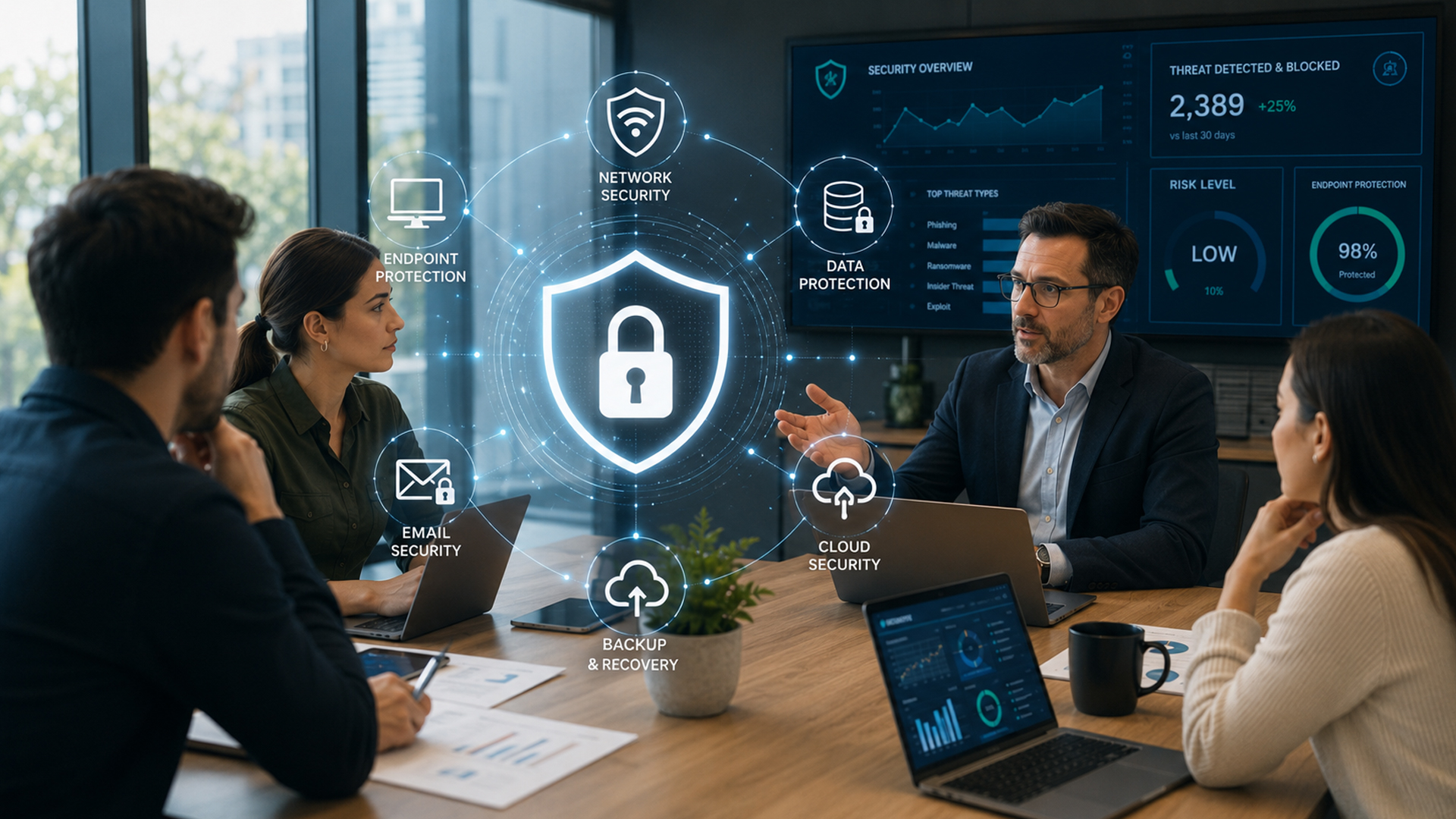
What Is Cybersecurity for SMBs in 2026
Small and mid-sized businesses are no longer overlooked by cybercriminals.
In 2026, they are primary targets because attackers expect weaker defenses and limited security resources.
A single breach can stop operations, expose sensitive data, and damage customer trust permanently.
Most SMBs still believe cybersecurity is only for large enterprises, which creates dangerous exposure.
Modern cyberattacks are automated, fast, and designed to exploit these gaps instantly.
Quick Answer: What Is Cybersecurity for SMBs?
Protection of business systems, networks, and data from cyber threats
Prevention of unauthorized access, ransomware, and phishing attacks
Continuous monitoring of digital environments for suspicious activity
Use of security tools, policies, and employee awareness training
Reduction of financial, operational, and compliance risks
Why Cybersecurity Matters in 2026
Cyber threats have evolved significantly with automation and AI-driven attacks.
SMBs are now easier and more profitable targets than large enterprises due to limited defenses.
Key realities in 2026:
Attackers use AI to create highly convincing phishing emails
Ransomware attacks are faster and more destructive
Cloud systems are frequently misconfigured
Remote work increases entry points for attackers
Without proper cybersecurity, even a small vulnerability can lead to full business disruption.
Risks, Threats, and Compliance Issues
Cybersecurity failures can impact every part of a business.
Common risks include:
Data breaches exposing customer and financial information
Ransomware locking critical business systems
Financial fraud through compromised accounts
Regulatory compliance violations such as data protection laws
Long-term reputational damage
Industries like healthcare, finance, legal, and SaaS face even stricter compliance requirements due to sensitive data handling.
MSP Cybersecurity Solutions for SMBs
Managed Service Providers offer structured cybersecurity protection without requiring in-house teams.
Core services include:
24/7 threat monitoring and detection
Endpoint protection across devices and servers
Email filtering to block phishing attacks
Firewall and network security management
Backup and disaster recovery systems
Explore managed IT services for complete protection.
Learn more about cybersecurity solutions.
Tools, Frameworks, and Best Practices
Effective cybersecurity relies on layered defense strategies.
Common frameworks include:
Zero Trust access control
Multi-factor authentication
Endpoint Detection and Response systems
Continuous system monitoring tools
Regular patch management and updates
These layers work together to reduce vulnerabilities and improve detection speed.
Cost of Ignoring Cybersecurity
Failing to implement cybersecurity can result in severe consequences:
Extended downtime affecting revenue
High ransomware recovery costs
Legal penalties and compliance fines
Permanent loss of customer trust
Business closure in extreme cases
The cost of prevention is significantly lower than recovery after an attack.
Step-by-Step Cybersecurity Framework
Step 1: Assessment
Evaluate current IT systems and identify vulnerabilities.
Step 2: Risk Identification
Analyze threats across endpoints, cloud systems, and user access.
Step 3: Implementation
Deploy cybersecurity tools, policies, and protections.
Step 4: Monitoring
Continuously track systems for unusual activity and threats.
Step 5: Continuous Improvement & Compliance
Update systems, conduct audits, and maintain regulatory compliance.
MSP / Cybersecurity Value for SMBs
MSPs simplify cybersecurity for small businesses by providing enterprise-level protection at predictable costs.
Key advantages:
Access to advanced security tools without large investments
Faster detection and response to threats
Reduced need for in-house IT security staff
Scalable protection as business grows
Improved compliance readiness
Outsourcing cybersecurity allows business owners to focus on operations instead of managing threats.
Real-World Use Cases
Healthcare
Protects patient records and ensures compliance with regulations.
Finance
Secures transactions and prevents fraud attempts.
Legal
Protects confidential case files and client data.
SMB Retail
Secures payment systems and customer information.
SaaS Companies
Protects cloud infrastructure and user accounts.
Manufacturing
Secures operational systems and supply chain data.
FAQ
Conclusion
Cybersecurity is no longer optional for small businesses in 2026.
Threats are faster, smarter, and more damaging than ever before.
Without protection, even a minor vulnerability can lead to major business disruption.
A proactive cybersecurity strategy is essential for survival and growth.

